






Congratulations... You're engaged! Pause, breathe, and enjoy the moment. When you're ready, use this practical 10 step roadmap to turn that "now what?" feeling into a confident plan. Each step includes quick action items so you can start ticking things off straight away.

Genevieve Photography
1. Soak it all in!
What it means:
This is the “be newly engaged” step. Before agendas and spreadsheets, give yourselves time to enjoy the news, the hugs, the ring, and the small private moments that will become your favourite memories.
Why it matters:
Starting planning too fast can make everything feel transactional. A short pause helps you both reconnect with why you’re getting married and sets a calm emotional tone for the planning ahead.
Action steps:
- Plan a quiet celebration (dinner, champagne, a weekend away).
- Take photos/prints of ring photos for keep sakes.
- Have an engagement photoshoot.

Paper and Pine Co
2. Share the news
What it means:
This means what ever is right for you guys. Decide the order and the tone of your announcement: who to tell in person, who to call, what to post on social. Some couples prefer private calls to parents and grandparents before a social announcement.
Why it matters:
Clear sequencing prevents accidental spoilers and ensures your closest friends and family feel included. It also gives you control of the story you want to tell about your day.
Action steps:
- Make a short list (this can be physical or mental): parents, siblings, close friends.
- Draft you social post and plan when to post (after you've told everyone important).

Lace & Favour
3. Think big picture
What it means:
Talk together about the broad vision for your wedding: scale (intimate or large), location (local or destination), level of formality, and the feeling you want (romantic, festival, minimalist, boho).
Why it matters:
Big-picture alignment drives all major decisions; guest numbers, budget allocation, venue choices, and supplier selection.
Action steps:
- Create a shared mood board.
- Choose 3 'must-haves' each and 3 'don't-wants' to compare.
- Note any family or cultural traditions you must include.

White Stag Photography
4. Set a budget
What it means:
Create a realistic budget based on your priorities, contributions (family, yourselves, others), and a contingency for unexpected costs.
Why it matters:
A budget is the single most powerful tool that keeps decisions intentional and prevents overspending as excitement builds.
Action steps:
- Find your overall budget and take note.
- List expected categories (venue, food, photos, attire, flowers, confetti, entertainment).
- Allocate a % to each category based on priorities (e.g. venue, 15% catering).
- Keep 5-10% as a contingency line for surprise costs.
Practical tip:
Use a spreadsheet or a free wedding budget app to track deposits, balances, and due dates.

Amelia Events
5. Create a guest list
What it means:
Drafting a guest list early gives you a realistic headcount to guide venue selection and budget planning.
Why it matters:
Guest numbers are one of the first constraints venues and caterers ask for. They influence location, cost per head, and the overall vibe.
Action steps:
- Each partner should make an A/B/C list: A = must invite, B = nice to have, C = maybe.
- Tally the A and B lists to create a rough head count (include +1).
- Decide how flexible you'll be with invites (children, colleagues, old friends).

Easton Grange
6. Pick a date and venue
What it means:
Choose a season and shortlist venues that fit your mood and guest count. If you have a 'must-have' venue, check availability first, popular dates go quickly.
Why it matters:
Securing a venue locks in your date and helps align availability of all other suppliers. Once you sort the venue everything else can follow.
Action steps:
- Pick three preferred dates (including alternatives for your top venue).
- Visit shortlisted venues in person (or request virtual tours).
- Ask venues about vendor policies (confetti/flower rules, noise curfew, clean-up).
Confetti tip:
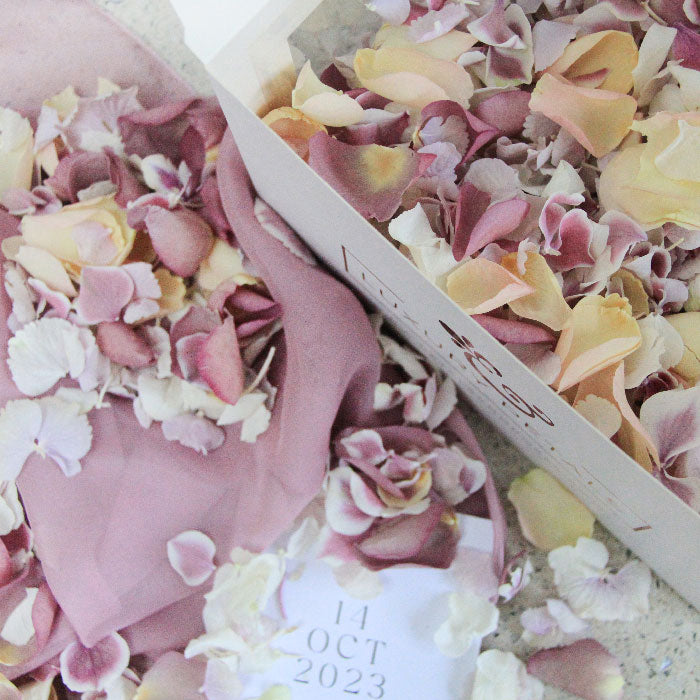
Most venues will only allow biodegradable confetti. Our range of freeze dried petal confetti is completely biodegradable.

Easton Grange
7. Decide your wedding style
What it means:
Narrow down colours, floral style, stationery tone, attire formality, and decor. This is the creative brief you'll give your florist and stylist.
Why it matters:
A clear style makes it easy to shortlist suppliers, design invitations, and ensure your day feels cohesive in photos.
Action steps:
- Finalise a primary colour palette (3 colours) and complementary neutrals.
- Choose floral types that match seasonal availability to control cost.
- Save example images for your florist and stylist.
Confetti tip:
Choose petal colours that complement your palette for the perfect confetti photos. Petals and Roses offers a Pick and Mix service to make sure you can find the perfect match.

The Wedery
8. Explore wedding events or fairs
What it means:
Attend local wedding fairs, supplier showcases, or online events to discover vendors, see sample setups, and get ideas you hadn’t considered.
Why it matters:
Wedding events are efficient: you can meet many suppliers in one place, compare pricing, and sometimes secure event-only discounts.
Action steps:
- Find 2-3 recommended events or virtual showcases to attend.
- Bring a short brief: guest count, date range, style, and budget.
- Collect business cards and follow up quickly with your top choices.
Practical tip:
The National Wedding Show has various locations around the UK at different times of year. To get a head start join us at the Spring National Wedding Show in the NEC Birmingham.

DORA MakeUp
9. Start booking key suppliers
What it means:
Begin with the suppliers who get booked fastest: venue (already done), photographer, caterer, and planner. Then secure florist, entertainment, and hair & makeup.
Why it matters:
High-quality suppliers are often booked 12–18 months ahead for popular seasons. Securing them early gives you more choice and peace of mind.
Action steps:
- Photographer & videographer: enquire and book as soon as date is confirmed.
- Celebrant/officiant: confirm legal requirements and availability.
- Caterer: confirm menu options and dietary flexibility.
- Florist & stylist: book to reserve seasonal blooms.
- Entertainment/DJ/band: listen to samples and check setlists.
Contract checklist:
Always require a written contract, deposit details, cancellation policy, and a clear deliverables list (hours of coverage, final file delivery timeline).

Francesca Bravo
10. Plan your photographs
What it means:
Think through the photos you want: ceremony moments, family group shots, couple portraits, confetti toss, and candid guest moments.
Why it matters:
A shot list ensures you don’t miss important memories and helps your photographer plan logistics and timing for the day.
Action steps:
- Create a must have shot list and a nice to have list.
- Schedule time in the timeline for couple portraits (golden hour if possible).
- Decide on locations for photos (on-site, nearby landmarks, gardens).
- Plan your confetti moment: who tosses, where it happens, and how far guests should stand.
Confetti tip:
You will need around one litre of confetti for every 8-10 guests. Find out exactly how much you would need with our Confetti Calculator.
Planning the first steps after getting engaged doesn’t have to be overwhelming. Use this roadmap to stay organised and enjoy every milestone, from the venue tasting to the confetti toss.
